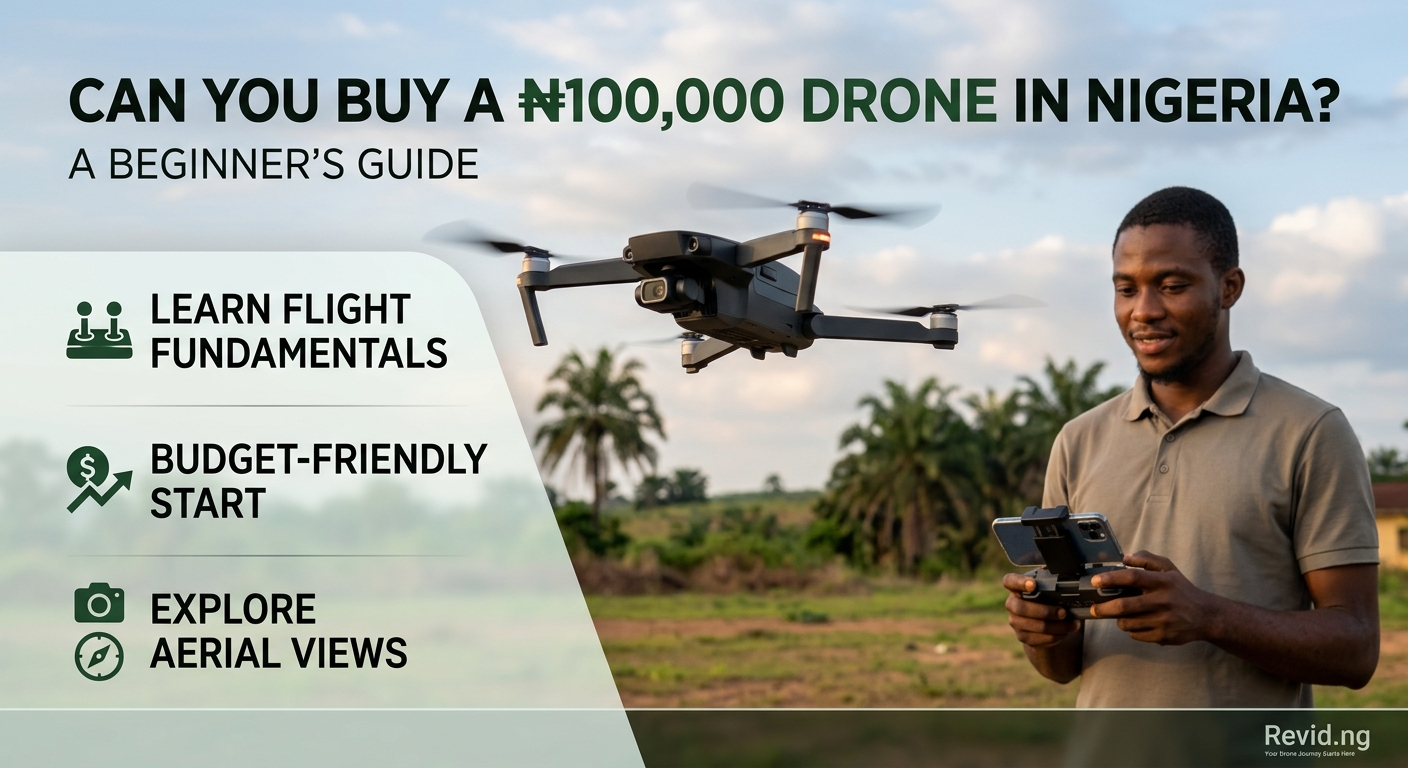
Can You Buy a ₦100,000 Drone in Nigeria? A Beginner's Guide to Getting Started
Introduction
Getting into drones has become increasingly attractive in Nigeria. From aerial photography and content creation to recreational flying, real estate documentation and professional drone operations, there are more reasons than ever to explore the possibilities of unmanned aerial vehicles (UAVs).
However, one question frequently comes up among aspiring drone pilots: Can you actually buy a drone for ₦100,000?
The short answer is yes. You can find entry-level drones within this budget, but understanding what they offer, their limitations and what to expect from your first aircraft is essential before making a purchase.
You do not necessarily need millions of naira to begin your drone journey. What matters is choosing an aircraft that matches your current needs and expectations.
What Does a ₦100,000 Drone Actually Offer?
At this price point, you're generally looking at entry-level drones designed to introduce new pilots to the fundamentals of flight.
These aircraft can provide an opportunity to learn basic controls, understand directional movement, practice take-off and landing, and develop confidence operating a remotely piloted aircraft.
Depending on the manufacturer and model, you may find features such as:
Camera functionality for basic aerial viewing and recording.
Altitude hold for easier flight control.
Headless mode for simplified directional operation.
Basic positioning assistance.
Multiple speed settings.
Rechargeable batteries.
Dedicated remote controllers.
Foldable designs for easier transportation.
However, specifications and capabilities vary significantly between models.
It is important to understand that advertised features do not always translate into the same real-world performance. For example, a drone advertised as having a 4K camera may not deliver the image quality expected from an aircraft with a properly stabilized camera system.
Always evaluate the actual capabilities of a drone rather than relying exclusively on marketing descriptions.
Is a ₦100,000 Drone Suitable for Beginners?
Absolutely.
For someone entering the drone world for the first time, an entry-level aircraft can be a reasonable starting point.
Learning to operate a drone involves more than simply moving joysticks. Pilots need to understand orientation, altitude management, directional movement, wind conditions, battery management and safe landing procedures.
An affordable entry-level drone can help you become familiar with these fundamentals before committing to a more expensive aircraft.
It can also help you determine whether drone flying is something you genuinely want to pursue as a hobby, creative interest or professional skill.
However, beginners should understand the limitations.
A drone within this budget will generally not offer the same camera quality, flight stability, obstacle avoidance, wind resistance or advanced positioning systems found in more sophisticated aircraft.
If your primary goal is professional aerial photography, commercial video production or surveying, you will eventually need to consider more capable equipment.
What Should You Look for Before Buying Your First Drone?
Your budget alone should not determine your choice. Several important factors deserve attention before purchasing your first aircraft.
1. Flight Stability
Flight stability is one of the most important characteristics to consider.
A drone that responds predictably to control inputs makes learning easier. Look for information about its positioning system, hovering capabilities and performance in outdoor conditions.
Understand the difference between basic altitude hold and GPS positioning, as they provide different levels of assistance.
2. Battery Performance
Flight time determines how long you can operate your drone before returning to recharge.
Check the manufacturer's advertised flight time and look for independent user experiences where available.
Also consider whether replacement batteries are readily available. Having additional batteries can make practice sessions more productive.
3. Controller Experience
A dedicated remote controller can provide a more familiar and precise flying experience than relying entirely on a smartphone.
Pay attention to controller ergonomics, connection reliability and available control options.
4. Camera Capabilities
If aerial photography is one of your reasons for buying a drone, investigate its actual camera capabilities.
Consider resolution, video quality, image stabilization, camera movement and recording options.
Remember that digital zoom, advertised resolution and actual image quality are not the same thing.
5. GPS and Positioning
GPS positioning can help an aircraft maintain its location and altitude more reliably outdoors.
Some entry-level aircraft offer GPS-assisted flight, while others rely on simpler positioning systems.
Understanding this difference is particularly important if you intend to practice outdoors.
6. Spare Parts Availability
A drone is an aircraft with moving components that may eventually require replacement.
Before purchasing, investigate the availability of replacement propellers, batteries, motors and other essential components.
A seemingly affordable drone can become difficult or expensive to maintain if replacement parts are unavailable.
7. Manufacturer Support and Reliability
Consider the manufacturer's reputation, product documentation, software support and availability of technical assistance.
Buying from a recognized manufacturer or reputable seller can make a significant difference to your ownership experience.
Beyond DJI: Other Drone Manufacturers Worth Knowing
One common misconception among new drone enthusiasts is that DJI is the only manufacturer worth considering.
Although DJI has established a strong position in the consumer and professional drone markets, several other manufacturers develop capable aircraft for different applications and budgets.
Here are some brands worth knowing as you explore the industry.
DJI
DJI offers a broad range of drones, from compact aircraft in its Mini series to more advanced models in the Air and Mavic families.
Its product range serves content creators, photographers, commercial operators and experienced drone pilots.
Potensic
Potensic develops consumer camera drones with features that vary across its product range.
Its Atom series, for example, includes GPS-equipped aircraft with stabilized cameras, making the brand worth exploring for people looking beyond entry-level drones.
FIMI
FIMI is another manufacturer worth considering, particularly for people interested in GPS camera drones.
Selected FIMI models offer features such as stabilized cameras, intelligent flight functions and extended flight capabilities.
Autel Robotics
Autel Robotics develops more advanced camera drones for aerial photography, commercial applications and professional operations.
Its EVO series includes aircraft designed for users who require more sophisticated imaging and flight capabilities.
These manufacturers demonstrate that the drone industry is much bigger than one brand.
However, not every model from these manufacturers is suitable for every budget. Their aircraft vary considerably in price, capabilities and intended applications.
What If You Eventually Want to Become a Professional Drone Pilot?
Starting with an affordable drone does not mean you have to remain at that level.
Many people discover their interest in drones through recreational flying before developing skills in aerial photography, videography, real estate marketing, construction documentation, agriculture and other commercial applications.
As your experience grows, you may begin looking for aircraft with:
Mechanical camera stabilization through a gimbal.
Higher-quality image sensors.
Longer flight endurance.
More reliable positioning systems.
Advanced obstacle sensing.
Better wind resistance.
Intelligent flight and tracking capabilities.
Professional video recording options.
Depending on your requirements, aircraft from DJI, Potensic, FIMI, Autel and other established manufacturers may offer suitable options.
The important thing is to choose equipment based on the work you intend to perform rather than purchasing a particular brand simply because it is popular.
Understanding the Difference Between an Entry-Level and Professional Drone
It is important to recognize that not every drone with a camera is designed for aerial photography or commercial operations.
Entry-level aircraft are primarily useful for learning flight fundamentals and becoming familiar with drone controls.
More advanced camera drones typically introduce mechanical gimbal stabilization, better imaging systems, GPS-assisted positioning and additional safety features.
Professional requirements can go even further, depending on the nature of the operation.
For example, documenting a construction project, producing commercial real estate footage and carrying out agricultural mapping may require entirely different aircraft and equipment.
Understanding these differences will help you make better purchasing decisions as your ambitions grow.
Important: Learn to Fly Responsibly
Regardless of the amount you spend on your first drone, responsible operation should always be a priority.
Before flying, understand the applicable aviation regulations in Nigeria and any operational restrictions that may apply to your location.
Avoid restricted airspace, respect people's privacy, maintain awareness of your surroundings and never fly in conditions beyond your aircraft's capabilities.
Develop good battery management habits and avoid pushing your drone beyond its safe operating limits.
Good flying habits are just as important as having good equipment.
Final Thoughts
You do not necessarily need millions of naira to begin learning how to fly a drone.
A ₦100,000 budget can provide an entry point into the world of drone flying, provided you understand the limitations of the aircraft available at that price.
Your first drone can help you develop fundamental flying skills, explore aerial technology and discover whether you want to take things further.
As your knowledge and experience increase, you can explore more advanced aircraft from manufacturers such as DJI, Potensic, FIMI, Autel and others.
The journey does not have to begin with the most expensive equipment. It begins with understanding what you need, making an informed decision and learning to fly responsibly.
Your drone journey starts somewhere. Let Revid help you take the next step.
Explore drones, creator equipment and aerial solutions at Revid.ng.
Buying Guides7 min read
Can You Buy a ₦100,000 Drone in Nigeria? A Beginner's Guide to Getting Started
Want to start flying drones but working with a ₦100,000 budget? You don't necessarily need millions of naira to begin your drone journey. Discover what a beginner can realistically expect from a ₦100,000 drone, the features worth considering, and how to choose an entry-level aircraft that helps you develop real flying skills.
Revid•